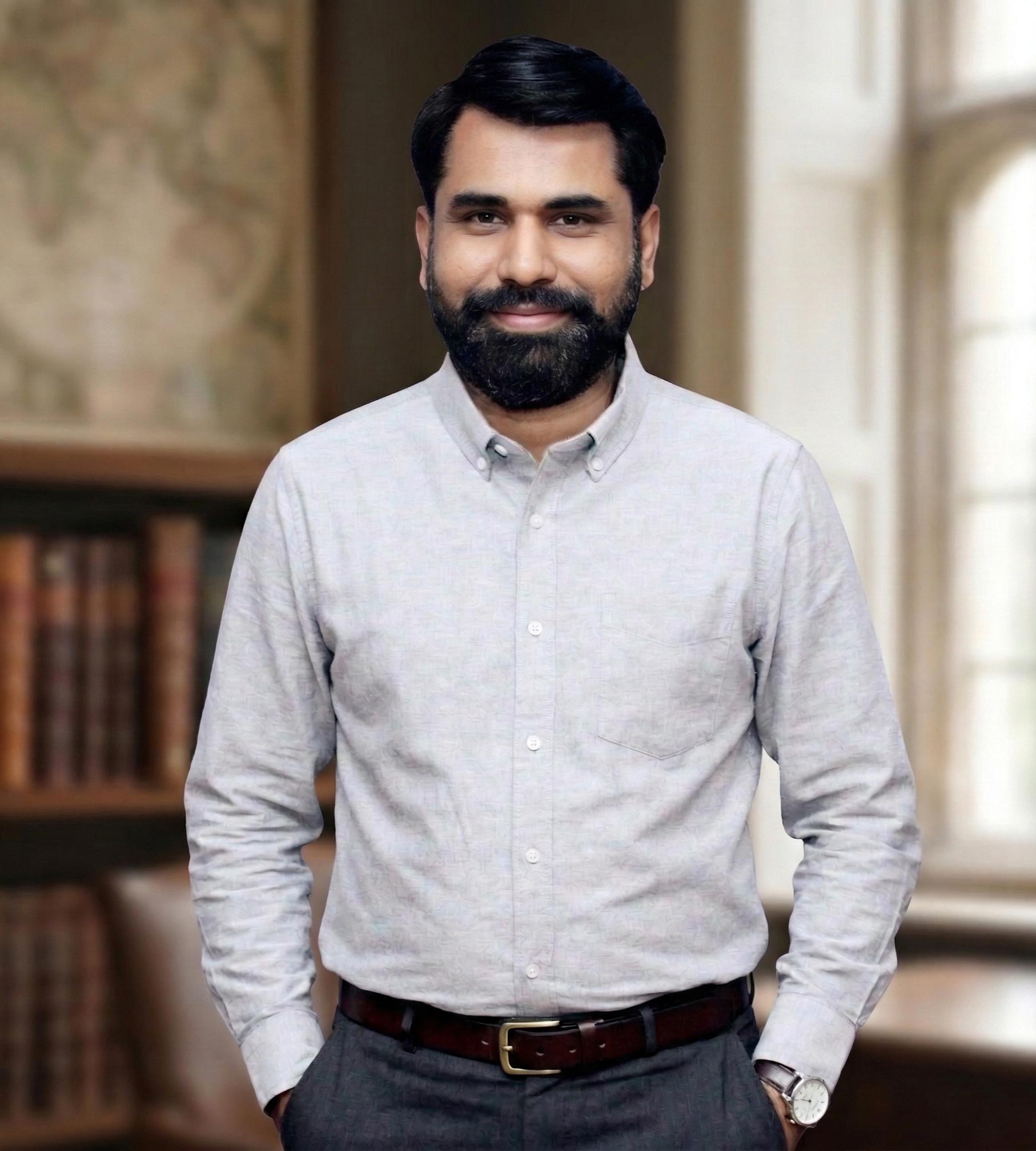
Computational Neuroscience·XR Visualisation·GPU Computing
I build GPU-accelerated visualisation systems for large-scale neural networks. The NeuroConstellation platform family renders up to 5.28M neurons across 5 platforms: desktop, mixed reality, virtual reality, and WebGPU browser.
I successfully defended my PhD in Life Sciences and Biotechnologies at the University of Sassari, Italy, on 6 May 2026. My doctoral research developed the NeuroConstellation platform family — five GPU-accelerated visualisation tools for rendering large-scale neural network activity across desktop, mixed reality, virtual reality, and web browser environments.
My work sits at the intersection of computational neuroscience, extended reality, and human-computer interaction. I collaborate with researchers at the Institute of Biophysics CNR Palermo (Migliore lab), George Mason University (Ascoli lab), EBRAINS-Italy, and Aix-Marseille University, where I completed a 6-month international research mobility from August 2025 to January 2026. My ongoing research includes EEG signal analysis using MATLAB and brain co-simulation frameworks within the EBRAINS-Italy infrastructure.
Before the PhD, I earned an M.S. in Software Engineering from UESTC, China — where my thesis focused on fine-grained emotion detection from text using deep learning — and a B.S. in Computer Science from the University of Sindh, Pakistan. This interdisciplinary background, combining software engineering, NLP, and neuroscience, shapes how I approach complex visualisation challenges.
Notable distinction: Part of the first group of international students invited to serve as museum guides in UESTC's 60-year history (2019), delivering special lectures on Chinese technological advancement to a global audience.
Outside research, I have been actively involved in community work — most notably as an ILM Ambassador with the British Council's Take a Child to School programme, which contributed to enrolling over 110,000 out-of-school children across Pakistan.
Five GPU-accelerated visualisation systems spanning desktop, mixed reality, virtual reality, and the open web — rendering neural activity at scales previously inaccessible to interactive exploration.
GPU-accelerated desktop visualisation of large-scale neural network activity, including human hippocampal CA1 datasets. Six visualisation modes alongside parallel GPU-accelerated analysis (firing-rate maps, recruitment maps, spike-history trails); validated against a Python NumPy/SciPy reference pipeline.
Mixed reality visualisation of mouse hippocampus CA1 neural activity on Microsoft HoloLens 2, using a distributed workstation–headset architecture for high-resolution rendering. Hand gesture interaction via Microsoft MRTK, with a novel proxy container interaction paradigm for manipulating dense neural datasets.
Stereoscopic VR visualisation of human hippocampus CA1 neural activity in Varjo XR-4 with Ultraleap hand tracking. Configurable dataset loading and confidence-based gesture interaction enabling six-degree-of-freedom manipulation in immersive space.
Browser-based neural visualisation using WebGPU compute shaders. All six visualisation modes translated from HLSL to WGSL. Zero installation — runs in Chrome, Edge, Firefox, and Safari on any WebGPU-capable browser. Open-source release archived on Zenodo.
Open live demoSignal processing pipelines using MATLAB for EEG data analysis, implementing machine learning algorithms for pattern recognition and brain state classification.
Co-simulation tasks integrating multiple brain modelling platforms to bridge different scales of neural organisation, in collaboration with EBRAINS-Italy.
Fine-grained emotion classification using LSTM, CNN, and transformer architectures. Research conducted at UESTC NLP Lab.
Final-year project officially adopted as the Sindh University Larkana Campus web portal. First prize in the departmental software project exhibition.
Try the browser-native version — million-scale neural visualisation running entirely on WebGPU compute shaders. No installation, no headset, just a modern browser.
Best experienced in a dedicated browser tab where WebGPU has full GPU access. Requires Chrome 113+, Edge 113+, Safari 18+, or Firefox 141+.
Launch demoCore thesis publications, conference posters, and collaborative works.
NeuroConstellation: Real-Time Visualisation and Analysis of Million-Neuron Datasets Using Game Engine Technology
iScience · Chapter 4
Zenodo: 10.5281/zenodo.17650645HoloNeV: Advancing Human-Computer Interaction in Neuroscience Through Mixed Reality Neural Visualisation
MDPI Electronics · Chapter 5
Mixed Reality Visualisation of Mouse Hippocampus CA1 Neural Activity with Hand Gesture Interaction on Microsoft HoloLens 2
Scientific Reports · Chapter 6
Immersive Virtual Reality Visualisation of Human Hippocampus CA1 Neural Activity with Hand Tracking Interaction in Varjo XR-4
Springer Nature Virtual Reality · Chapter 7
NeuroConstellation Web: Real-Time Visualisation of Million-Scale Neural Activity via WebGPU Compute Shaders
IEEE Transactions on Visualization and Computer Graphics · Chapter 8
Live demoHoloNeV: Holographic Visualisation Tool for Neural Network Activity
Organisation for Computational Neurosciences (OCNS), Florence, Italy
Holographic Visualisation of Neural Network Activity
EBRAINS-Italy, Naples, Italy — GPU-accelerated indirect instancing on HoloLens 2
Visualization and simulation of full-scale point-neuron circuits via the Neural Circuit Visualizer web platform
Scientific Reports, 16, 14345 — Open Access · Published 20 March 2026
DOI: 10.1038/s41598-026-44588-0Neural Circuit Visualizer: A Web-Based Platform for the Simulation and Visualisation of Full-Scale Point-Neuron Circuits
Organisation for Computational Neurosciences (OCNS), Florence, Italy
The Evaluation and Comparative Analysis of Role Based Access Control and Attribute Based Access Control Model
15th ICCWAMTIP, pp. 35–39
DOI: 10.1109/ICCWAMTIP.2018.8632578Neural Network Visualisation & AI
Educational Programme Management
Examination Quality Control
Machine Learning Research
Banking Technology Department
University of Sassari (UNISS), Italy
Thesis: Real-Time Visualisation of Large-Scale Neural Networks: GPU-Accelerated Methods for Desktop, Extended Reality, and Browser Platforms.
Supervisors: Prof. Sergio M. G. Solinas and Prof. Paolo Enrico (Department of Biomedical Sciences).
International mobility (completed): Institut de Neurosciences des Systèmes (INS), Aix-Marseille Université, France (Aug 2025 — Jan 2026).
University of Electronic Science and Technology of China (UESTC)
Thesis: Fine-Grained Emotion Detection from Text using Deep Learning. Specialisation in Machine Learning, NLP, and Software Architecture.
University of Sindh, Pakistan
Focus: Software Development, Database Systems, Web Technologies. First prize in Final Year Software Project Exhibition.
New Banat High School, BISE Hyderabad
The Best Academy, BSE Karachi
Third prize for outstanding academic research performance
Second prize for excellence in arts, sports, and voluntary work
Recognition for leadership and academic excellence
First prize in Final Year software project exhibition
Awarded laptop for exceptional academic performance
Outstanding performance during bachelor studies
International Cycling Competition
Muslim Students Spring Sports — UESTC
UESTC Summer Sports
Muslim Student Spring Sport Activities
Cultural Activities at UESTC
Electronic Museum Award — UESTC
Winter Inter-Dormitory Olympics
Organising seminars and cultural events
University of Electronic Science and Technology of China (UESTC)
Part of the first group of international students invited to serve as museum guides in UESTC's 60-year history. Delivered special lecture introducing Chinese technological advancement to a global audience.
Featured in UESTC NewsWorkshop organised by F. de Pasquale & S. Della Penna
Environmental & Computational Neuroscience, Aix-Marseille University
BRAin DYnamics Academy
School of International Education
UET Lahore & FAST University with IEEE
Build your Skills, Knowledge, Abilities (SKAs)
Sports & Youth Affairs Department, Government of Sindh
Statistical analysis training
Education Ambassador for ILM-POSSIBLE: Take a Child to School (TACS) programme.
Impact: Contributed to enrolment of 110,000+ out-of-school children across Pakistan's four provinces.
British Council programmeEnvironmental and cultural organisation
International Students Union elections management
Community-building activities
China Soft Conference 2018
40th Anniversary of China's Reform Forum
International Freshers' Orientation
Promotional interviews for international education
International Students Union initiative
Open to postdoctoral positions, research collaborations, and consulting opportunities in computational neuroscience, XR, and GPU-accelerated visualisation.